
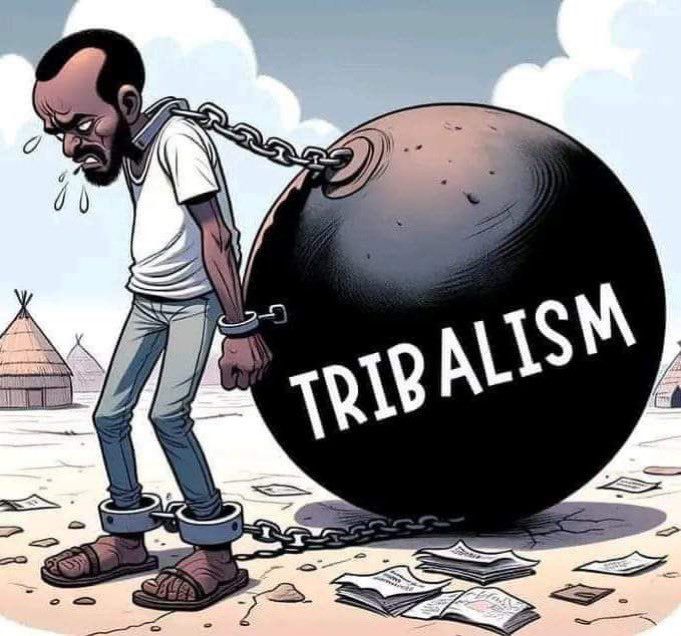
Nigeria is home to over 250 ethnic groups, but one rivalry that stands out is that between the Yoruba and the Igbo tribe.
Though the Yoruba and Igbo are both culturally rich, accomplished, and highly influential, their relationship is often clouded by political rivalry and distrust. In some families, inter-tribal marriage is still taboo. This tribalism has quietly filtered into everyday life, from job opportunities and renting homes to heated social media debates.
But where did it all begin? Is it colonial history, the Biafran war, economic power struggles, or decades of harmful stereotypes passed down through generations? Let’s take a look at three major reasons why they hate each other.
ALSO READ: Top 5 Nigerian tribes with the cheapest bride price
3 Reasons Why Yorubas And Igbos Hate Each Other
1. History
Before British colonisation, the Yoruba and Igbo existed largely in isolation from each other. The Yoruba had structured kingdoms and city-states (like Oyo and Ife), while the Igbo lived in decentralised, egalitarian communities. These vastly different governance systems made them culturally and politically distinct.
In 1914, the British amalgamated the Northern and Southern Protectorates into a single entity, Nigeria, not for unity’s sake, but for administrative convenience. By this act, ethnic divisions were not only ignored but also exploited and thus began the competition for favour, access, and identity under an imposed national structure.
RELATED: Pastor Bolaji Idowu criticises Yoruba timidity, praises Igbo boldness in viral sermon
2. Ethnic Politics
In the years leading to independence, politics quickly took on an ethnic character. The Yoruba nationalism was led by Chief Obafemi Awolowo and his Action Group (AG), and Igbo nationalism, the NCNC, was led by Dr. Nnamdi Azikiwe. The rivalry between Awolowo and Azikiwe mirrored the broader competition between the two groups. Each leader was a symbol, and their clash for dominance defined much of pre-independence politics.
3. The Civil War
The breaking point came in 1966. A coup led mostly by Igbo officers killed major northern and Yoruba leaders, sparking outrage. A counter-coup followed, targeting the Igbo. Ethnic violence escalated, leading to the secession of Biafra and the devastating Nigerian Civil War (1967–1970). Although the Yoruba weren’t direct participants in the war, many Igbos saw Awolowo’s support of the federal blockade, which led to mass starvation in Biafra, as betrayal.
For decades, this has shaped Igbo perception of Yoruba politics: cunning, calculating, and self-preserving at the cost of others. The Yoruba, on the other hand, viewed the Igbo as aggressive and overreaching, pointing to the 1966 coup and perceived attempts at domination.
RELATED: Biafra Day 2025: Reflecting on history, embracing unity
Recent Political Tensions
After the war, the military took over, and later democracy returned in 1999 with a Yoruba president, Olusegun Obasanjo. Meanwhile, the Igbos, despite their population size and economic strength, remained politically fragmented and underrepresented at the federal level.
Recent elections, especially in Lagos, have re-exposed this ethnic rivalry. The candidacy of Peter Obi (an Igbo) in 2023 and the backlash in some Yoruba quarters reignited questions of belonging, power, and ethnic loyalty. Social media debates, identity politics, and market clashes have kept the rivalry fresh in the national consciousness.
The stereotype is that many Yorubas view Igbos as overly ambitious, aggressive in business, and indifferent to local customs, especially in places like Lagos. While many Igbos perceive Yorubas as two-faced, politically slippery, and too loyal to politicians. And this tribalism serves no purpose other than to divide us all.
The Yoruba-Igbo rivalry is not necessarily driven by hate. It’s driven by competition for space, power, and recognition in Nigeria. What’s needed now is a new generation of Nigerians who can engage beyond these stereotypes, demand accountable leadership across ethnic lines, and foster a nation built on merit, not manipulation.
RECENT: Top 5 hottest male ethnicities (2025) – Guess who’s #1?
