
By Luminous Jannamike
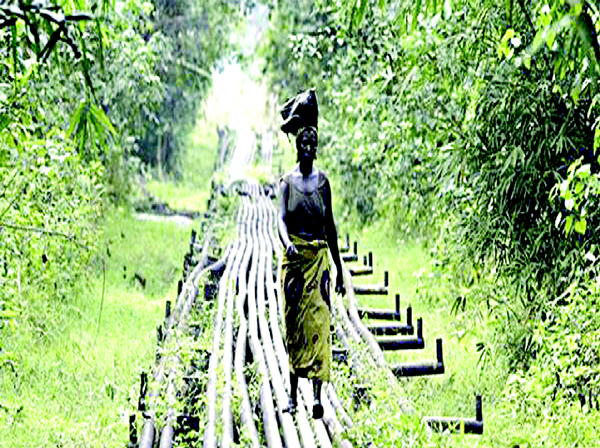
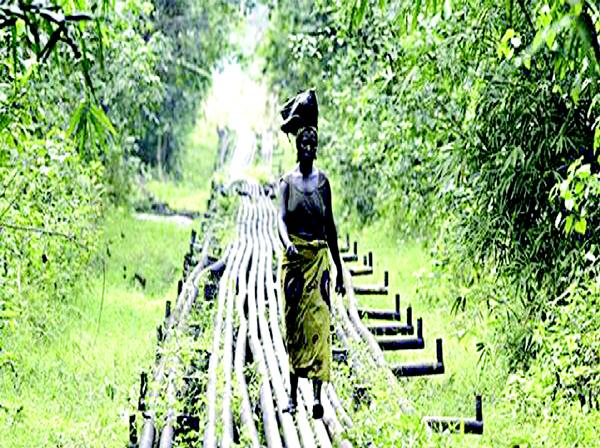
ABUJA — A pan–Niger Delta group has asked the Federal Government to decentralise pipeline surveillance operations across oil-producing communities.
The group said the move would ensure fairness and transparency in the management of Nigeria’s oil resources and give host ethnic nationalities a direct role in protecting crude oil infrastructure located on their ancestral lands.
It warned that excluding these communities from safeguarding pipelines could threaten long-term stability in the Niger Delta and weaken the protection of Nigeria’s most important revenue source.
The demand was made at a press briefing in Abuja by the United Niger Delta Congress (UNDC). The statement was read by the group’s National President, Julius Mallam-Obi, while the convener of the organisation, Fejiro Oliver, and the National Secretary, Hon. Emaluji Michael Sunday, were also present.
Nigeria depends heavily on crude oil from the Niger Delta, yet many of the ethnic nationalities that produce the resource remain outside the protection, management and economic benefits linked to it, the group said.
“This situation is unjust, dangerous, unacceptable, and unsustainable. Our mission is clear: to protect the collective interests of the Niger Delta ethnic nations, ensure that the benefits derived from our natural resources are shared fairly and transparently, and promote peace through justice and inclusion.
“We firmly believe that justice is the foundation of peace, and exclusion is the seed of instability. For several years, the Federal Government has spent enormous public funds, running into trillions of naira, on pipeline surveillance contracts designed to protect Nigeria’s most critical economic asset: crude oil infrastructure. These contracts were meant to protect pipelines, prevent crude oil theft, and increase national oil production,” they said.
Despite that spending, the organisation said Nigeria’s oil output has remained below its potential.
“Yet despite this massive expenditure, Nigeria’s oil production has remained stagnant at approximately 1.4 to 1.5 million barrels per day, far below the nation’s potential production capacity of over 2 million barrels per day.
“How can Nigeria be spending billions on pipeline security while oil production continues to underperform? Where exactly is all the money going?” they asked.
The UNDC traced the current debate over resource justice to decades of agitation by Niger Delta leaders who pushed for fairness for oil-producing communities.
Nearly six decades ago, nationalist and Niger Delta activist Isaac Adaka Boro demanded justice for communities whose resources sustain Nigeria’s economy. Years later, environmental campaigner Ken Saro-Wiwa led a peaceful struggle for environmental and economic justice for the Ogoni people before his execution in 1995.
“We take this opportunity to thank Mr President for pardoning the Ogoni Nine. That was most thoughtful. These patriots did not fight for monopolies, exclusion, or domination by a few individuals. They fought for justice, fairness, and collective prosperity.
“Across the Niger Delta today, one troubling question is being asked more frequently: Who guards the guardians of the pipelines?”
“If those entrusted with protecting pipelines are also positioned, directly or indirectly, to benefit from crude oil diversion, then Nigeria is not merely facing corruption. Nigeria would be confronting economic sabotage on a national scale.
“The Niger Delta is not a one-ethnic region. It is home to numerous oil-producing ethnic nationalities, including Isoko, Ijaw, Urhobo, Itsekiri, Ndokwa, Ogoni, Ibibio, Efik, and others.
“Yet the present structure of pipeline surveillance contracts reflects an unhealthy concentration of opportunity and influence, leaving many oil-producing ethnic nations with little or no meaningful participation,” they said.
According to the group, the current arrangement runs against the spirit of the Petroleum Industry Act (PIA), which recognises the role of host communities in protecting oil infrastructure located within their territories.
“The implication is clear: host ethnic nations and communities must be directly involved in protecting oil facilities located on their ancestral lands.”
The UNDC said decentralising surveillance responsibilities across oil communities would strengthen protection of the country’s oil assets and improve intelligence gathering.
“Pipeline protection should involve indigenous stakeholders from the ethnic nations and communities where these facilities are located, with clear accountability for breaches or sabotage.
“Peace built on a monopoly is fragile. Peace built on justice and inclusion is sustainable.
“When surveillance contracts are decentralised, at least 35 percent of these opportunities should be allocated to women from oil-producing communities through cooperatives and community-based enterprises.”
The group also expressed concern about what it described as a pattern in which some political positions linked to Niger Delta affairs appear to be dominated by a single ethnic group.
The UNDC urged the Federal Government to improve transparency in the management of pipeline surveillance arrangements.
“The Federal Government must immediately conduct a comprehensive audit of all pipeline surveillance contracts currently in operation, publish the terms, beneficiaries and financial scope of these contracts, investigate crude oil losses occurring around export terminals, and ensure equitable participation of ethnic nationalities and host communities in surveillance activities.
“We also urge the Nigerian Senate and House of Representatives to exercise their constitutional oversight powers by launching a transparent investigation into the pipeline surveillance regime.”
“Nigerians deserve to know: who holds these contracts? How much public money is involved? Why does oil production remain stagnant despite huge spending?
“Today, we refuse to remain silent. We speak not in anger, but in conscience. Not to divide, but to restore fairness. Nigeria must choose between justice and instability. The time to act is now,” they urged.
The post N-Delta Group to FG: Decentralise pipeline surveillance in oil communities appeared first on Vanguard News.
