
By Adeola Badru
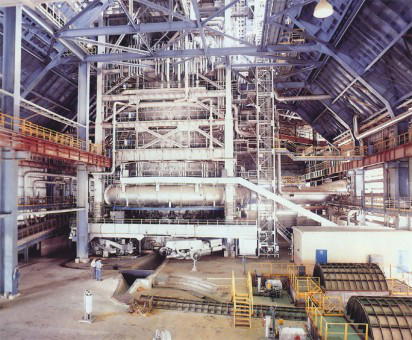
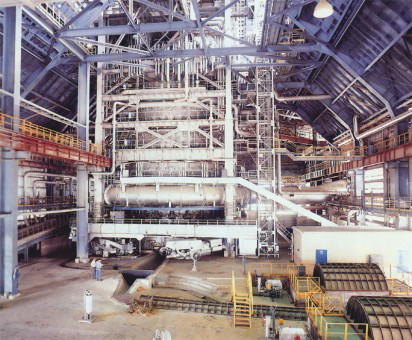
A former senior United Nations official and development economist, Professor Banji Oyeyinka-Oyelaran, has described the collapse of the Ajaokuta Steel project as a decisive turning point in Nigeria’s industrial decline, highlighting deep failures in policy consistency, institutional capacity and long-term national planning.
He made this known yesterday, during an interview with Vanguard, noting that Nigeria’s failure to complete the Ajaokuta Steel project went beyond the abandonment of a single industrial venture and had far-reaching consequences for the country’s economic development.
The development economist described the project as central to Nigeria’s industrial aspirations and argued that its collapse undermined the foundation upon which broader manufacturing and industrial growth should have been built.
“That moment, in my view, marked a turning point in Nigeria’s industrial decline. Steel is the foundation of industrial development, and without it, a country becomes dependent on imports.”
Oyeyinka-Oyelaran, who trained as a chemical engineer, was among the young Nigerian engineers recruited into the Ajaokuta Steel Company during its formative years.
He said the company deliberately assembled some of the country’s brightest engineering graduates as part of a long-term strategy to indigenise steel production and industrial design capacity.
“We were recruited into Ajaokuta Steel Company at a time when the ambition was not just to operate a steel plant, but to build national competence to design and run future steel projects.”
“As part of that strategy, Nigerian engineers were sent abroad for extensive technical preparation. We were immediately sent to India for a year-long, intensive technical training at major steel plants such as Bokaro Steel Company and Ranchi Steel Plant under a bilateral agreement between Nigeria and India.”
“The training combined theory with hands-on plant operations and was extremely demanding. The idea was to train Nigerians not only to run Ajaokuta, but also to design future steel plants,” he said.
Oyeyinka-Oyelaran, said that shortly after the engineers returned to Nigeria, the project began to experience serious setbacks.
He attributed the slowdown to funding shortfalls, shifting government priorities and broader macroeconomic pressures, adding that: “When we returned, funding challenges, policy inconsistencies and austerity measures stalled the project. Contractors were not paid, work slowed down significantly, and eventually the entire project was grounded.”
He argued that the failure to sustain momentum at Ajaokuta had long-term structural implications for Nigeria’s economy.
“The failure to complete Ajaokuta and related projects such as Delta Steel undermined Nigeria’s long-term economic future. Steel should have been the foundation for manufacturing, construction and downstream industries.”
Oyeyinka-Oyelaran also said the collapse of the steel project limited Nigeria’s ability to develop complementary industries that typically emerge around heavy industrial infrastructure.
“Without a functioning steel industry, you cannot stimulate the small- and medium-scale industries that should grow organically around it. That failure locked Nigeria into long-term import dependence.”
He rejected the notion that the project failed due to a lack of technical competence among Nigerians, saying that: “We had the skills, the training and the manpower.”
“What was missing was policy coherence, institutional stability and sustained commitment to a long-term national vision,” he said.
The experience at Ajaokuta, Oyeyinka-Oyelaran said, was both a national setback and a personal turning point, stating that: “The collapse of Nigeria’s industrial ambitions at Ajaokuta deeply affected me. It showed that development challenges were not primarily technical, but institutional and policy-driven.”
According to him, despite repeated efforts by successive governments to revive the Ajaokuta Steel project, it remained incomplete decades after construction began.
Oyeyinka-Oyelaran stressed that its continued failure remained symbolic of Nigeria’s missed industrial opportunities, adding that: “Ajaokuta should have been the bedrock of Nigeria’s industrialisation. Instead, it became a symbol of how the country failed to translate ambition into sustained industrial development.”
The post Collapse of Ajaokuta Steel signalled turning point in Nigeria’s industrial decline – Prof Banji appeared first on Vanguard News.
