
By Olasunkanmi Akoni
The Lagos State Government has clarified that the recent judgment of the Court of Appeal, Abuja Division, on Vehicle Inspection Service (VIS) operations does not invalidate enforcement activities in Lagos.
The Commissioner for Justice and Attorney-General, Lawal Pedro, said viral interpretations suggesting that the appellate court ruling applies across Nigeria are misleading.
The clarification followed a judgment of the Court of Appeal, Abuja Division, which upheld an earlier decision of the Federal High Court restraining Vehicle Inspection Officers (VIO) and the Directorate of Road Traffic Services in the Federal Capital Territory from stopping motorists, impounding vehicles, or imposing fines.
Pedro, in a statement, maintained that the courts based their decision on the absence of statutory powers authorising VIO officials in the FCT to carry out such enforcement actions.
“It is important to understand that the Honourable Judge of the Federal High Court and Justices of the Court of Appeal premised their decision on absence of statutory power conferred on the Respondents to stop, impound or confiscate vehicles and/or impose fines on motorists on roads in FCT Abuja,” the statement read.
While acknowledging the validity of the ruling within the FCT, the Lagos government stressed that the judgment is not of general or nationwide application.
“The judgment, though binding, is not of general application or of nationwide effect in Nigeria,” the ministry stated, adding that Nigeria’s federal structure permits states to legislate on residual matters, including vehicle inspection and traffic management.
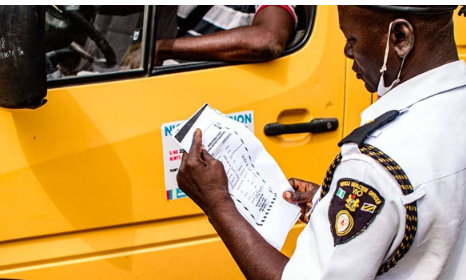
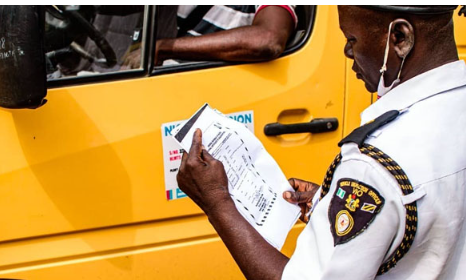
The government stressed that Lagos operates under the Lagos State Transport Sector Reform Law, which expressly establishes and empowers the Vehicle Inspection Service.
It cited Section 12(1) of the law, which vests the VIS with powers to inspect and regulate the roadworthiness of vehicles, conduct pre-registration inspections, issue Road Worthiness Certificates, and collaborate with other agencies to enforce traffic regulations.
It further referenced Section 23(1) of the law, which outlines procedures for imposing fines on offenders, noting that penalties are subject to judicial oversight through mobile or magistrate courts.
“The fine shall be paid either on the spot if it is imposed by a mobile court or within forty-eight hours upon issuance of the ticket by an authorised officer. On default of payment, a formal charge shall be proffered against the offender,” Pedro affirmed.
The ministry maintained that enforcement actions by VIS officers in Lagos are lawful and constitutionally grounded.
“The process and procedure of enforcement of power of the VIS officers on Lagos roads are in accordance with the law and not unlawful or unconstitutional,” he stated.
Motorists were urged not to rely on what the government described as misrepresentations of the Abuja judgment and to cooperate with authorised officers.
The government also warned that any motorist who obstructs or assaults VIS personnel in the course of their duties would face arrest and prosecution.
The clarification comes amid ongoing public debate following the appellate court’s ruling in Abuja, which restrained VIO operations in the FCT over lack of statutory backing.
The post Abuja court ruling on VIO powers doesn’t apply nationwide — Lagos Govt appeared first on Vanguard News.
