
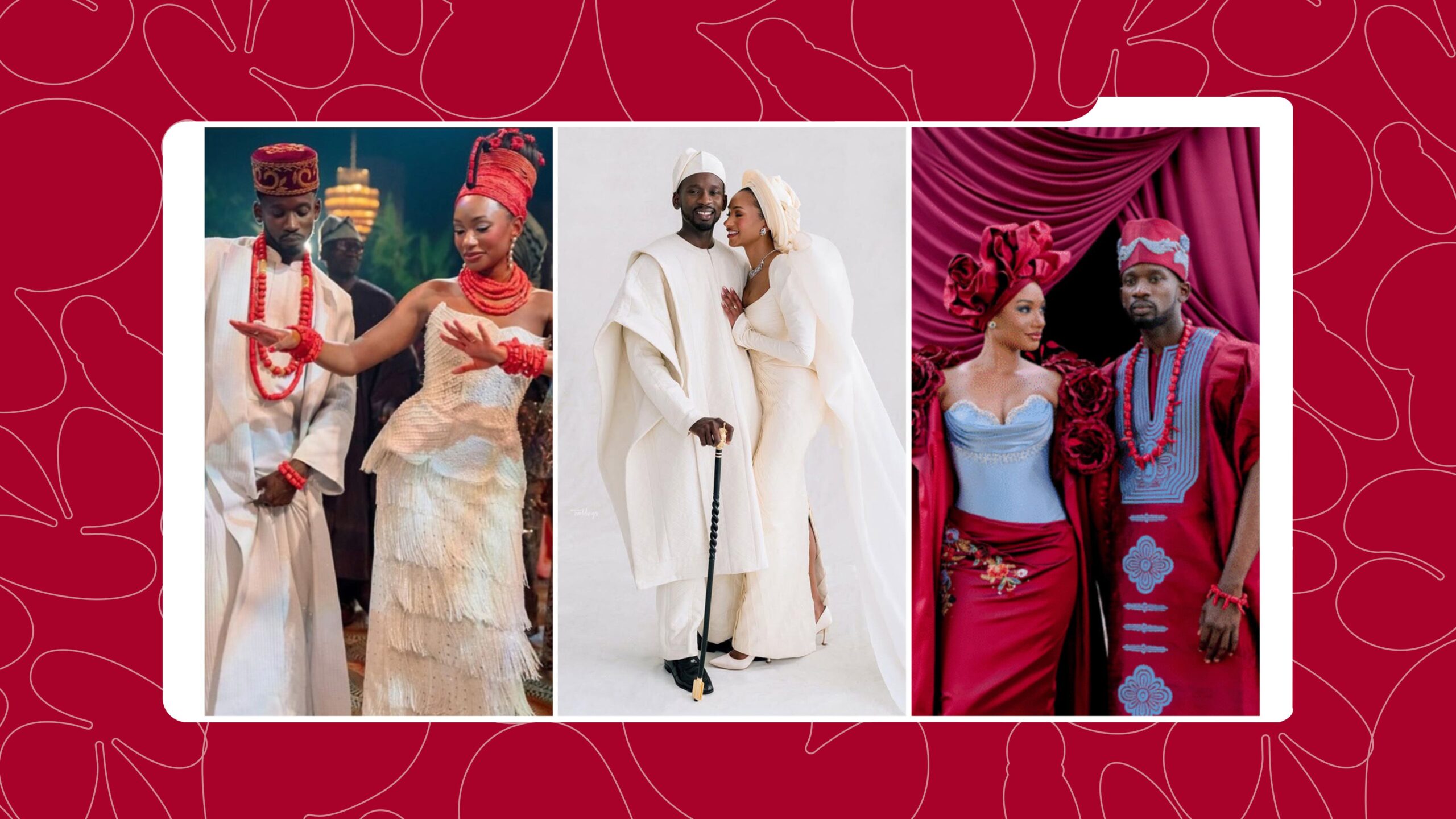
A Yoruba traditional wedding, known as the engagement ceremony (Ìgbéyàwó àṣà), is one of the most colourful and vibrant celebrations you’ll ever attend. It’s not just about the union of two families; it’s also a fashion runway where culture, elegance, and heritage shine.
Both bride and groom emerge in well-coiffed attire, topped with symbolic adornments that hold significance in Yoruba culture. From the fabrics that speak to wealth to the beads that announce royalty, each item dances with meaning.
Temi and Eazi’s traditional wedding ceremony is proof of how Yoruba culture can be reimagined with modern style. Eazi was seen in elegantly tailored agbadas, with a matching fila that sat tastefully in the traditional gobi way. His black leather boots grounded the outfit, and his walking stick with gold tips was not just part of his outfit, but a statement of authority and refined sensibility.
If you’re getting ready for your special day or a guest at one, this fashion guide will walk you through 15 must-have items for a full Yoruba traditional wedding ensemble, both for men (ọkọ iyawo) and women (iyawo).
1. Aso-Oke (The Crown of Yoruba Weddings)
No Yoruba traditional wedding outfit is complete without Aso-Oke, the noble handwoven cloth. Brides typically dress themselves in vibrant Aso-Oke with modern adornments, while the groom stays regal with darker colours such as wine, navy, or gold. Aso-Oke symbolises dignity and is normally chosen to match the couple’s family colours.
The aso-oke is also used to make an ipele (iborun) for the bride. Usually, the same design, but this time draped across her shoulder. It accompanies the gele and wrapper. The way the bride carries her ipele screams elegance and poise; it’s both practical and trendy.
Temi celebrated Yoruba bridal fashion with her ivory look in custom Zac Posen. Her gele was folded into a soft, tiered crown that rimmed her face. She carried a pleated ivory fan that resonated with the drama of her sweeping ipele, completing her look with grandeur. Her silver accessories and her crisp bridal makeup, delicate blush, bronzy tones, and a soft lip provided the finish that completed the entire ensemble.
2. Gele – Bride’s Statement Head Tie
Gele is not just a headwrap; it’s a crown. It is worn by brides in dramatic, sculpted folds that command attention. Gele is generally constructed of Aso-Oke, damask, or sego fabric and signifies dignity, elegance, and respect. It’s generally colour-matched with the groom’s cap for harmony.
3. Agbada – Groom’s Showpiece
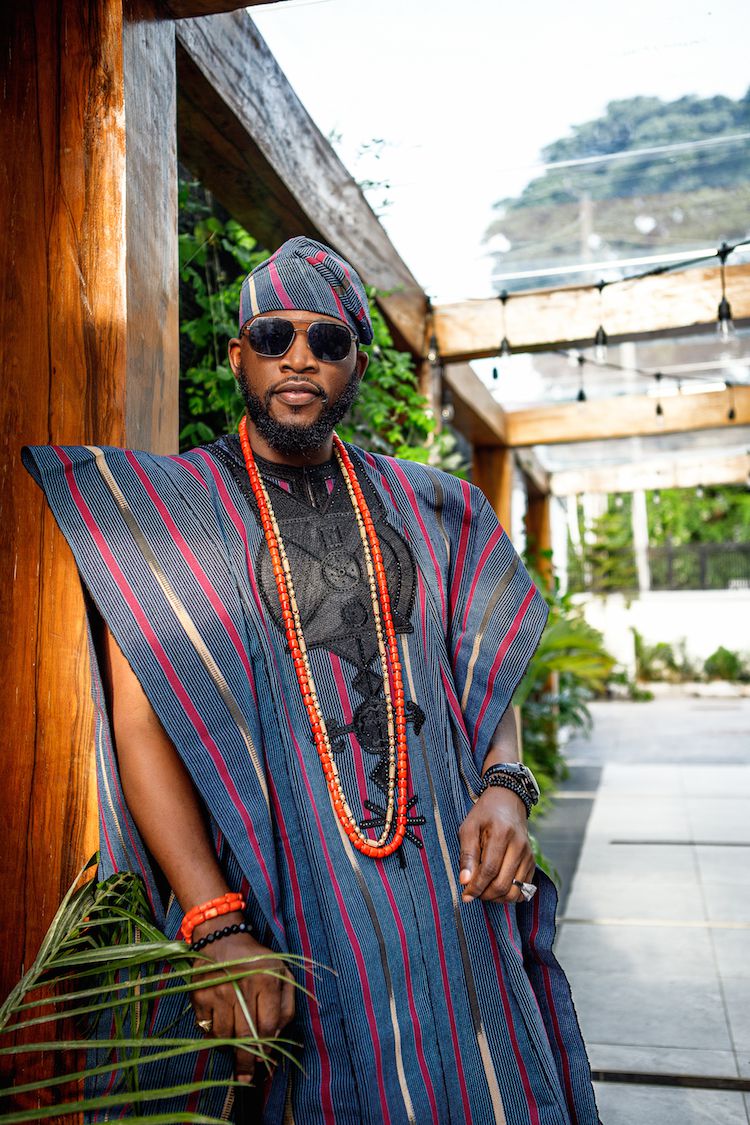
For the bridegrooms, agbada is the epitome of social prestige and masculinity. Luxurious materials like Aso-Oke, damask, or brocade are used to make it. It is usually layered beneath an inner shirt (buba), trousers (sokoto), and an agbada robe. The size of an agbada is also exaggerated to communicate confidence and social status.
4. Fila – The Groom’s Cap

The fila for the groom is the equivalent of the gele for the bride. Gobi style (angled sideways) or Abeti Aja style (flaps that look like a dog’s ears), the fila is essential to complete a groom’s attire. It is typically made of the same material as the agbada and signifies oneness in dressing.
READ MORE: Impress The Newlyweds In Your Life With These 9 Thoughtful Wedding Gift Ideas Under ₦30,000
5. Wrapper (Iro) – The Bride’s Foundation Piece
The iro is the large wrapper wrapped around the bride’s waist. Made traditionally with Aso-Oke or lace, it gives shape to the clothing. It can be worn by brides as a traditional wrapper or in a modern form with pleats and tailoring for a fitted silhouette. It represents modesty and tradition.
6. Coral Beads
7. Accessories – Fans, Clutches, and Canes
There would not be fashion without accessories. The brides occasionally carry hand fans, which could be feathered or beaded, to complete their wedding ensemble, as well as a fashionable clutch for a modern addition. The groom usually carries an ornamented walking stick (opa ase), indicating power and presence.
8. Shoes – Heels and Loafers
Footwear completes the outfit. Brides choose block heels, stilettos, or adorned sandals that complement their wrapper. Grooms prefer leather loafers or velvet slip-ons for comfort with fashion. Shoes are highly organised because Yoruba weddings entail a lot of standing, dancing, and posing for photographs.
