
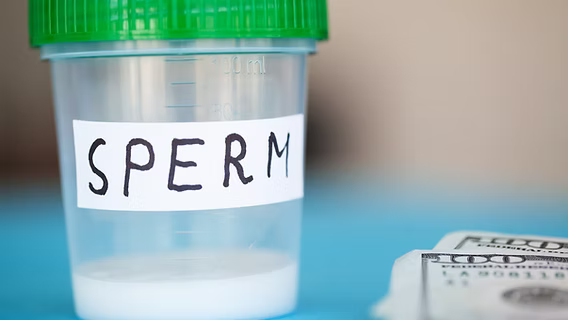
For many Nigerians, the idea of sperm donation feels like something that only happens in foreign movies or Western fertility clinics. But it’s real, and it’s happening right here in Nigeria. Fertility centres across the country are quietly seeking healthy male donors to help couples struggling with infertility.
But it’s not just about walking in, dropping off your sperm, and getting paid. The process is much more detailed, and not everyone qualifies.
If you’ve ever been curious about donating sperm, whether for the money, the cause, or just general knowledge, here’s everything you need to know.
Why sperm donation matters in Nigeria
Infertility is more common than you might think. According to the World Health Organisation, 1 in 6 people globally experience infertility at some point in their lives. In Nigeria, male-factor infertility accounts for up to 40–50% of infertility cases. This has increased the demand for assisted reproductive technologies like IVF and, in many cases, sperm donation.
Sometimes, couples turn to anonymous donors because the male partner is unable to produce healthy sperm due to medical issues, genetic conditions, or unexplained infertility. In other cases, single women or same-sex couples may also seek donor sperm to have children.
This is where sperm donors come in.
READ MORE: 7 interesting facts about sperm every man should know
Can you donate sperm in Nigeria?
Yes, but not just anyone can walk in and become a donor. Fertility clinics in Nigeria have strict screening processes to ensure that only healthy sperm from suitable candidates are used.
One of the most reputable centres offering this service is Nordica Fertility Centre, which accepts anonymous donations from willing male donors after a rigorous screening process. There are others across Lagos, Abuja, and Port Harcourt offering similar services.
Who can donate? Basic eligibility requirements
Different clinics may vary slightly, but the standard requirements usually include:
-
Age: Between 21 to 45 years old
-
Health: You must be in good physical and mental health with no serious genetic or chronic conditions
-
Lifestyle: Non-smokers, non-drug users, and those who do not engage in high-risk sexual behaviours
-
Family medical history: No history of hereditary diseases or mental illness
-
Sexually Transmitted Diseases: You must test negative for HIV, Hepatitis B & C, syphilis, and other infections
Some clinics may also require that you have fathered a child before, as this helps prove fertility.
SEE THIS: 20m Nigerians are living with Hepatitis B, C, or both
The screening process
Sperm donation isn’t anonymous from day one. You’ll first go through a multi-step screening process, which includes:
-
Initial application/interview: To assess if you meet the basic criteria
-
Semen analysis: To evaluate sperm count, motility, and morphology
-
Medical and family history review
-
Blood tests: To screen for infectious diseases
-
Genetic testing: Optional in some clinics but increasingly standard
-
Psychological evaluation: In some clinics, to ensure you’re mentally and emotionally fit to donate
If you pass all tests, your sperm sample is usually frozen and quarantined for 6 months, after which you’re retested before the sample is approved for use.
Is sperm donation anonymous in Nigeria?
Yes. Most clinics in Nigeria run anonymous donation programs, meaning you will not know who receives your sperm, and the recipient will not know you either. However, some private arrangements (non-anonymous) can occur, especially in known donor cases, but these are less common.
EXPLORE MORE: Can you be a sperm donor for your female friend? 4 men answer
Is there payment involved?
Yes, but it’s usually called a “compensation” for your time and effort, not a direct payment for sperm. According to News Medical, sperm donors typically receive compensation ranging from ₦50,000 to ₦100,000 per donation (US$30–US$60), depending on the fertility centre.
You may also be reimbursed for transportation, food, and time spent going through the tests.
What happens after you donate?
Once your sperm is accepted:
-
It’s stored in a cryobank (frozen storage) until needed.
-
It may be used in IVF or IUI procedures.
-
Some clinics have policies that limit how many families can use one donor’s sperm, to prevent accidental relations.
Is there a legal agreement?
Yes. You’ll typically be required to sign a donor agreement that clarifies that you give up all parental rights and responsibilities, you will remain anonymous (unless stated otherwise), and you agree not to make future claims or contact the child(ren) born from your donation.
It’s highly recommended to read everything thoroughly before signing. Some clinics also offer legal counselling as part of the process.
RECENT: Can you be allergic to sperm? Here’s why it happens to some women
